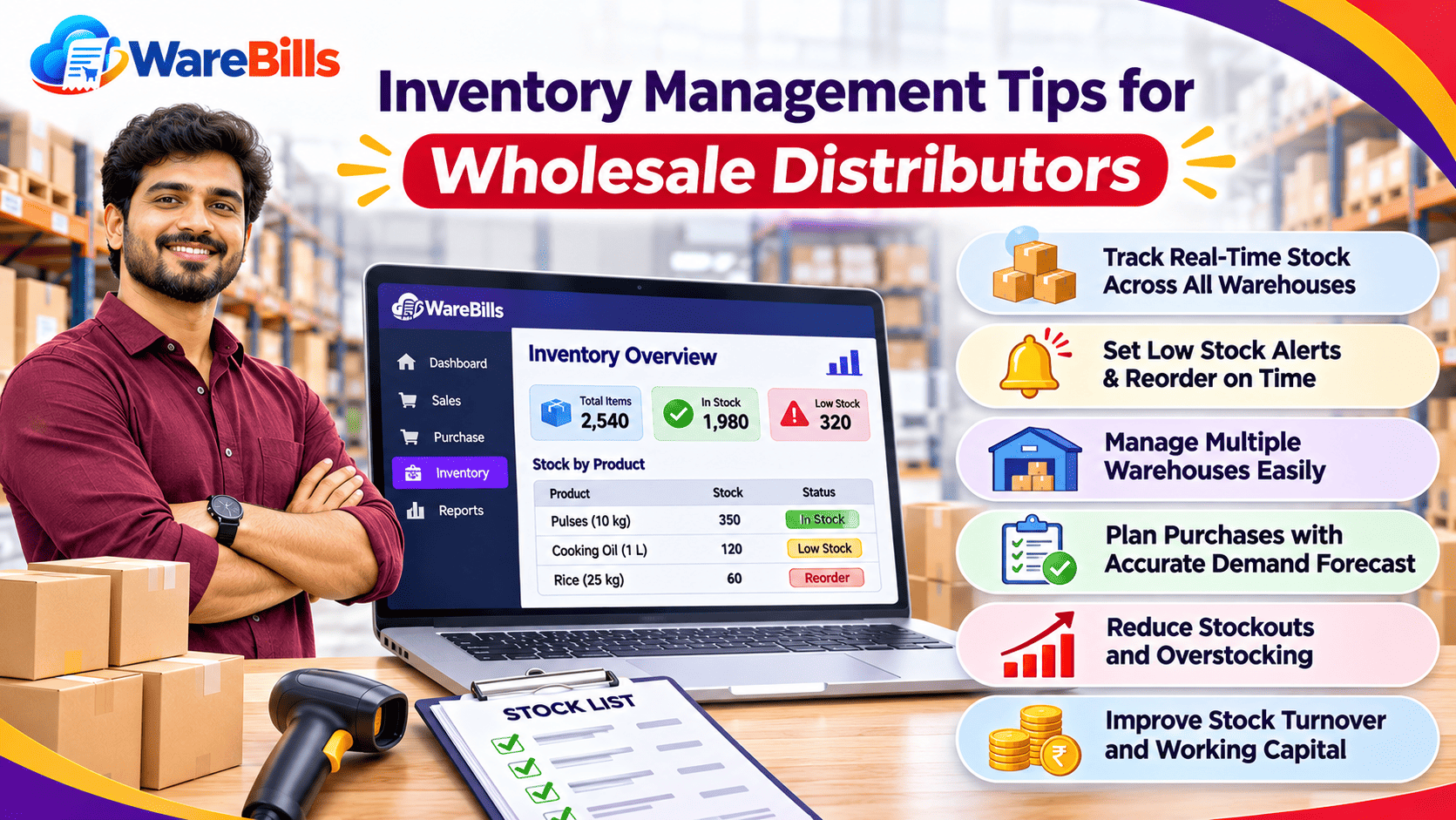
When inventory is managed through notebooks or disconnected spreadsheets, it becomes difficult to identify available quantities, locate products across warehouses and prevent stock discrepancies. These problems can lead to delayed orders, lost sales and excess inventory.
An organised garment inventory management process helps wholesalers maintain accurate stock records, fulfil customer orders efficiently and make better purchasing decisions.
1. Understand the Challenges of Garment Inventory Management
Garment inventory management involves more than counting products. Wholesalers must track individual variations and their movement throughout the business.
Common challenges include:
- Size variations: Different quantities may be available for S, M, L, XL and XXL.
- Colour variations: Black, white, blue and other colours require separate stock records.
- Style and design changes: Similar-looking products may have different designs, codes or prices.
- Multiple warehouses: Stock may be distributed across different storage locations.
- Returns and exchanges: Returned garments must be recorded correctly to maintain accurate quantities.
- Seasonal demand: Festival collections and seasonal clothing can become slow-moving stock after peak demand.
Identifying these challenges is the first step towards building a reliable stock management process.
2. Create a Clear Product and Variant Structure
Every garment should have a clear product name, product code and description. Where applicable, size, colour, design and brand should be recorded as separate product variations.
SKU means Stock Keeping Unit. A unique SKU for each variation helps staff distinguish products that look similar but have different stock quantities.
Practical tip: Establish a consistent product coding format before adding large numbers of products. Avoid creating duplicate product records simply because staff use different names for the same item.
3. Maintain Warehouse-Wise Stock Records
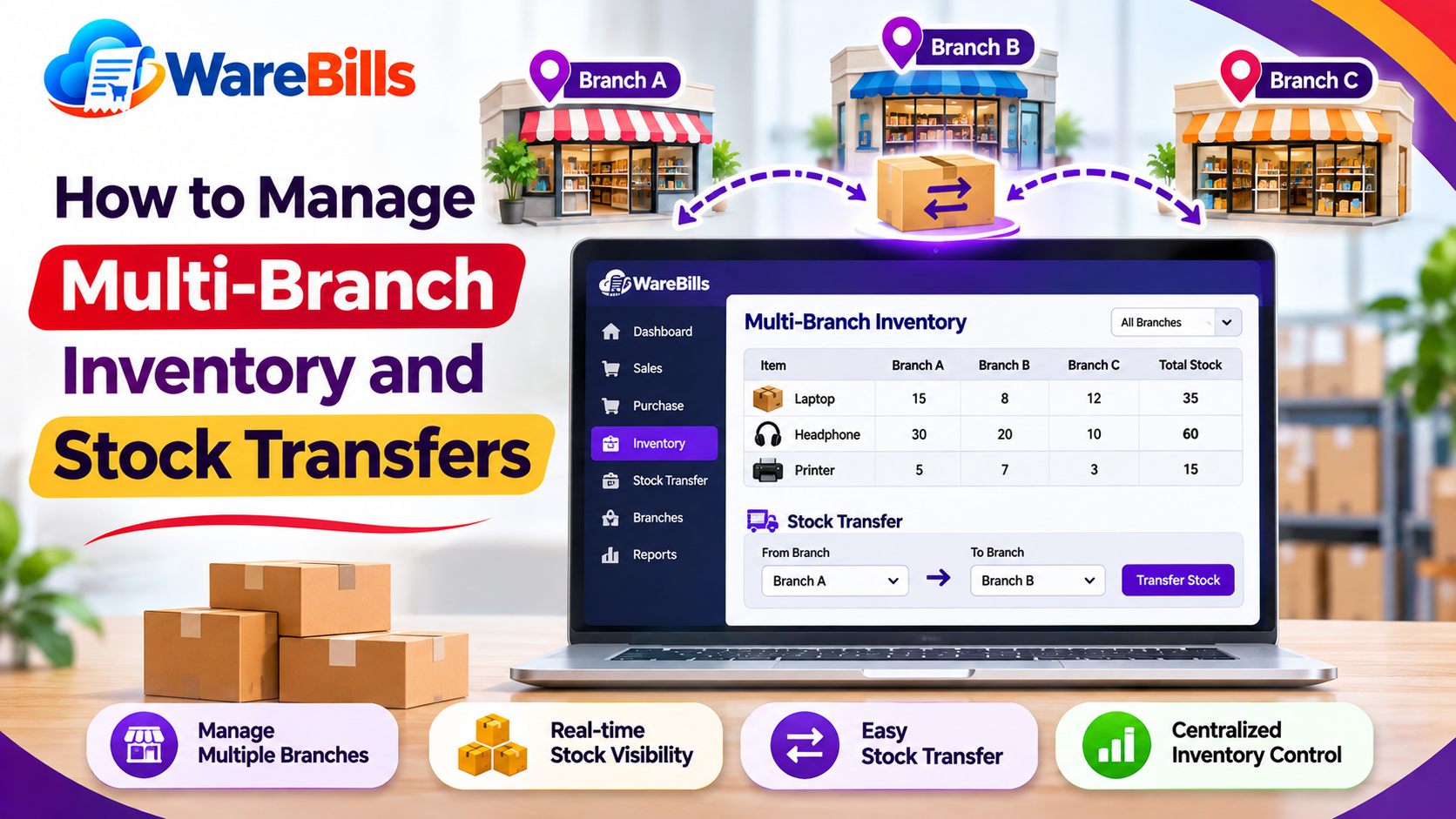
Garment wholesalers operating from multiple locations need to know not only how much stock they own, but also where it is stored.
For example, a wholesaler may keep shirts in a main warehouse and distribute selected quantities to a retail outlet or secondary warehouse. Without proper transfer records, the same stock may be counted twice or appear unavailable when it is physically present.
Follow these practices:
- Record stock received at each location.
- Document transfers between warehouses.
- Verify the quantity dispatched and received during transfers.
- Record sales and returns against the correct location.
- Review warehouse-wise stock balances regularly.
A reliable warehouse inventory process makes it easier to locate products and fulfil bulk orders on time.
4. Record Purchases, Sales and Returns Promptly
Inventory accuracy depends on recording every stock movement correctly.
A practical garment stock workflow includes:
- Purchase entry: Record incoming garments and verify quantities against supplier documents.
- Product identification: Confirm the product code and relevant size or colour variation.
- Sales entry: Deduct the quantities sold from the appropriate stock records.
- Sales returns: Inspect returned garments and determine whether they can be added back to sellable stock.
- Purchase returns: Record damaged, incorrect or excess goods returned to suppliers.
- Stock verification: Compare recorded quantities with physical stock periodically.
Delaying these entries can create differences between actual inventory and the quantities shown in business records.
5. Use Barcode Identification Where Appropriate
Barcode identification can help businesses identify products quickly and reduce manual product-selection errors, provided their software and equipment support the required workflow.
For garment wholesalers, barcode labels can be useful when similar products have different sizes, colours or styles.
Before implementing barcode inventory tracking, check whether the solution supports:
- Unique identification of individual product variations.
- Compatible barcode scanners and label formats.
- Accurate stock updates during sales and purchases.
- The required warehouse and product-level tracking.
Barcodes work best when product codes and inventory processes are already organised. A barcode alone cannot correct inaccurate product records or unrecorded stock movements.
6. Identify Fast-Moving and Slow-Moving Garments
Not every garment sells at the same rate. Basic T-shirts, school uniforms or everyday clothing may have steady demand, while particular designs and seasonal collections may sell more slowly.
Review sales data regularly to identify:
- Products that require frequent replenishment.
- Sizes and colours that sell quickly.
- Items that remain in storage for long periods.
- Seasonal products that need advance purchasing.
- Garments that may require discounts or promotional offers.
Use actual sales history rather than assumptions when deciding which products to reorder. This can help reduce unnecessary purchasing and prevent capital from being tied up in slow-moving stock.
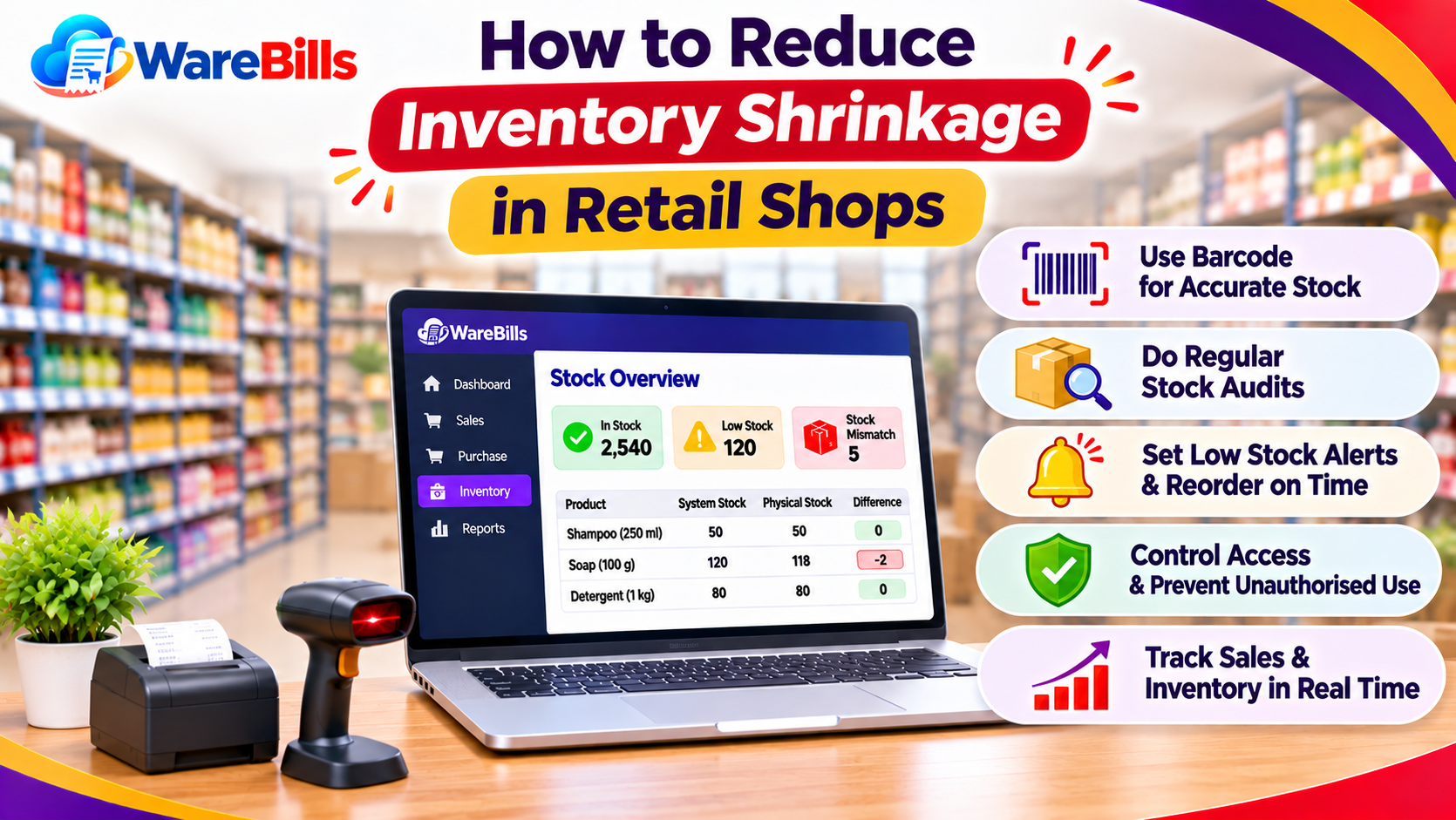
7. Perform Regular Physical Stock Verification
Even well-maintained inventory records can differ from physical stock because of damage, counting errors, misplaced products or unrecorded transactions.
A regular stock-checking routine helps detect these differences early.
Recommended approach:
- Count high-value and fast-moving products more frequently.
- Verify selected product categories on a rotating schedule.
- Investigate quantity differences before making adjustments.
- Record approved stock corrections with a reason.
- Review repeated discrepancies to identify the underlying problem.
For large warehouses, cycle counting—checking selected products regularly instead of counting everything at once—can make stock verification more manageable.
8. Choose Inventory Software That Fits Garment Wholesale Operations
As a garment business grows, spreadsheets may become difficult to maintain. Inventory and billing software can help centralise business records and reduce repetitive manual work.
Before selecting a solution, check whether it supports your actual operating requirements:
- Product codes and the size, colour or style variations you use.
- Warehouse-wise stock tracking and stock transfers.
- Purchase, sales and return records.
- Inventory reports and stock verification.
- Billing and supplier transaction workflows.
- Access controls and reliable data backup options.
Do not assume every software package supports garment-specific variants or every warehouse workflow. Confirm these features through a demonstration before migrating your records.
How WareBills Can Fit Into Your Garment Wholesale Workflow
Garment wholesalers looking to organise billing and stock records can explore WareBills to assess whether its available billing and inventory features fit their business requirements.
Before implementation, verify the specific functions needed for your operation, particularly size- and colour-wise stock handling, warehouse transfers, barcode compatibility and inventory reporting. Choosing software based on a real business workflow is more useful than selecting it based on a feature list alone.
Conclusion
Efficient garment inventory management requires clear product codes, accurate size- and colour-wise records, reliable warehouse tracking and timely transaction updates. Regular physical stock checks and sales analysis also help wholesalers identify discrepancies and make better purchasing decisions.
By improving these processes and choosing software that matches their actual requirements, garment wholesalers can reduce stock errors, improve order fulfilment and build a more organised inventory operation.