
Inventory Management Articles
All articles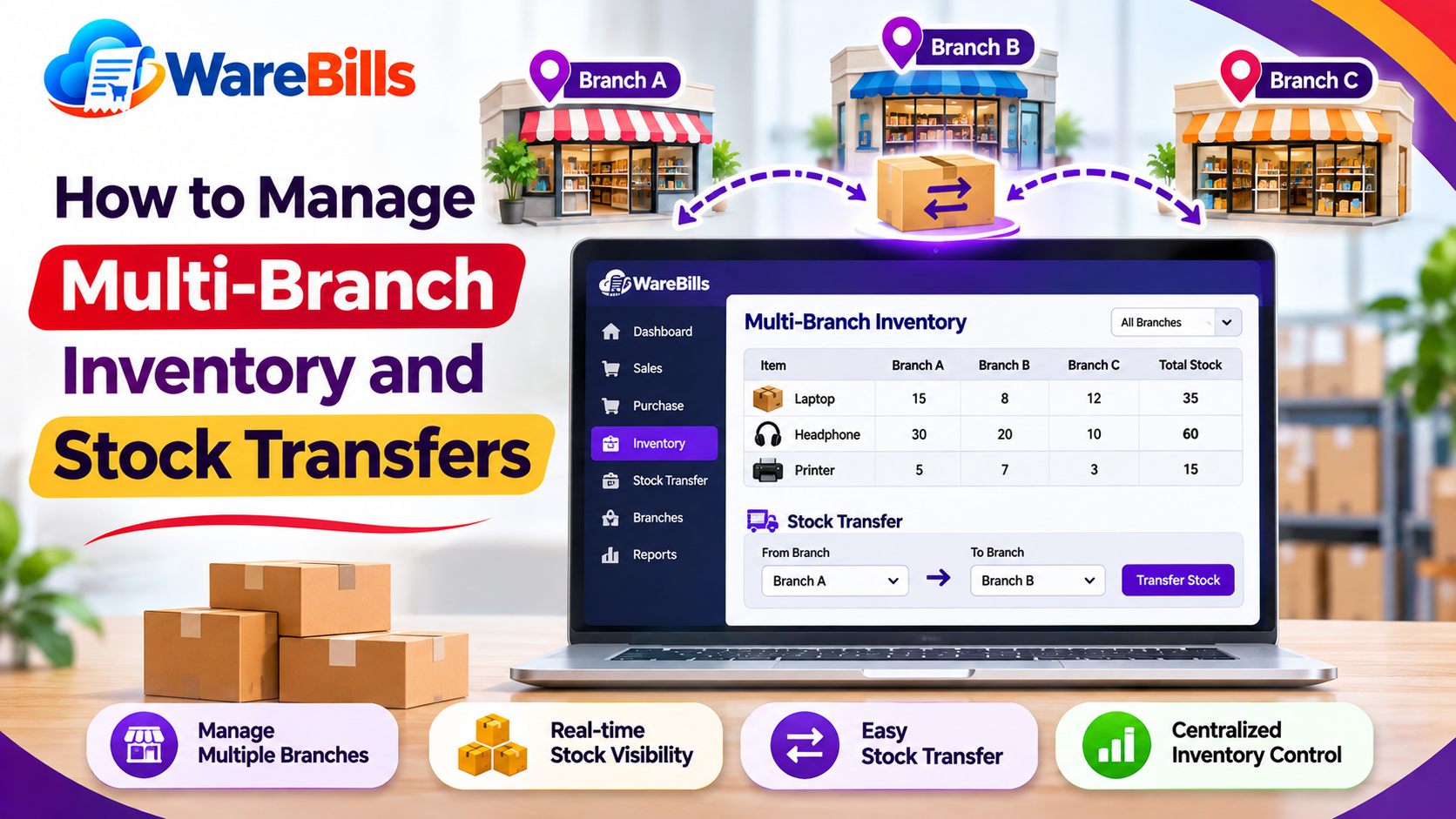 Inventory Management
How to Manage Multi-Branch Inventory and Stock Transfers
Managing inventory across multiple branches can become complicated as a business grows. A retailer with several shops, a wholesaler with multiple warehouses or a distributor serving different locations must keep track of stock at every location.
 Inventory Management
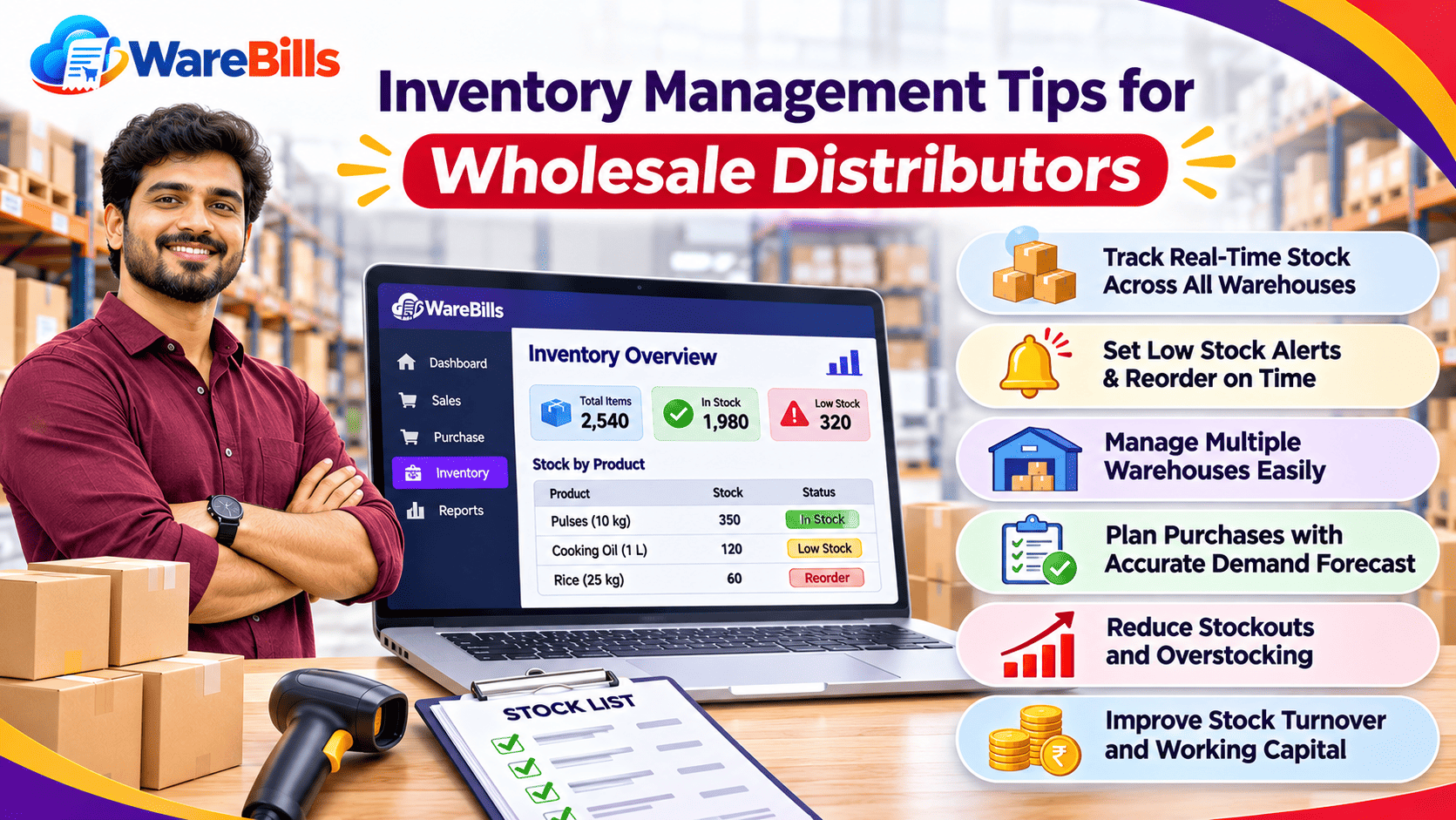
 Tips for Wholesale Distributors
Wholesale distributors play an important role in moving products from manufacturers and suppliers to retailers, dealers and other businesses. Managing this process requires accurate stock records, reliable supplier coordination and timely order fulfilment.
 Inventory Management
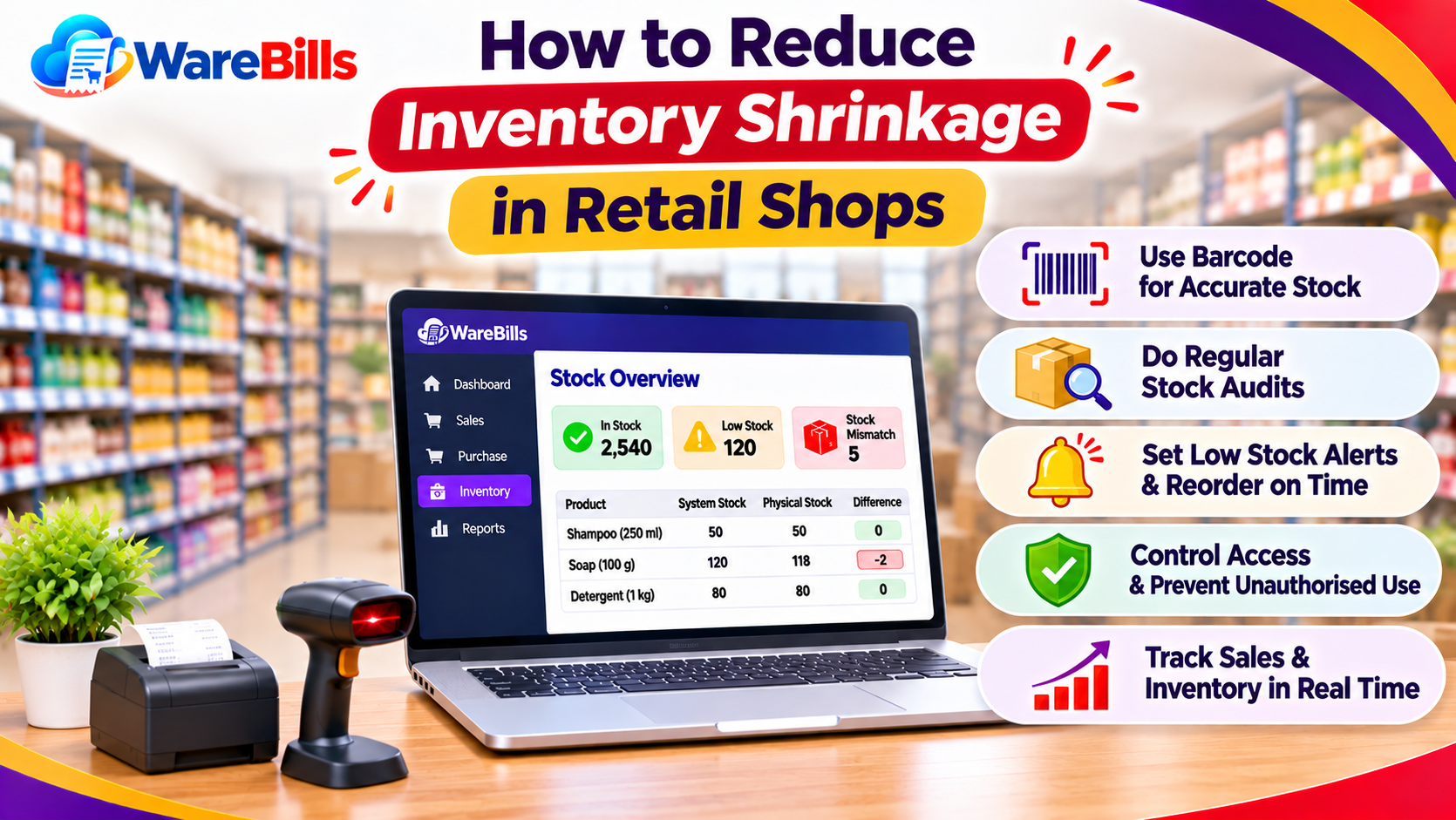
How to Reduce Inventory Shrinkage in Retail Shops
Inventory is one of the most important assets for a retail business. Every product purchased for resale represents money invested in stock. When products go missing, become damaged or are recorded incorrectly, the business may lose money without immediately noticing the problem.
 Inventory Management
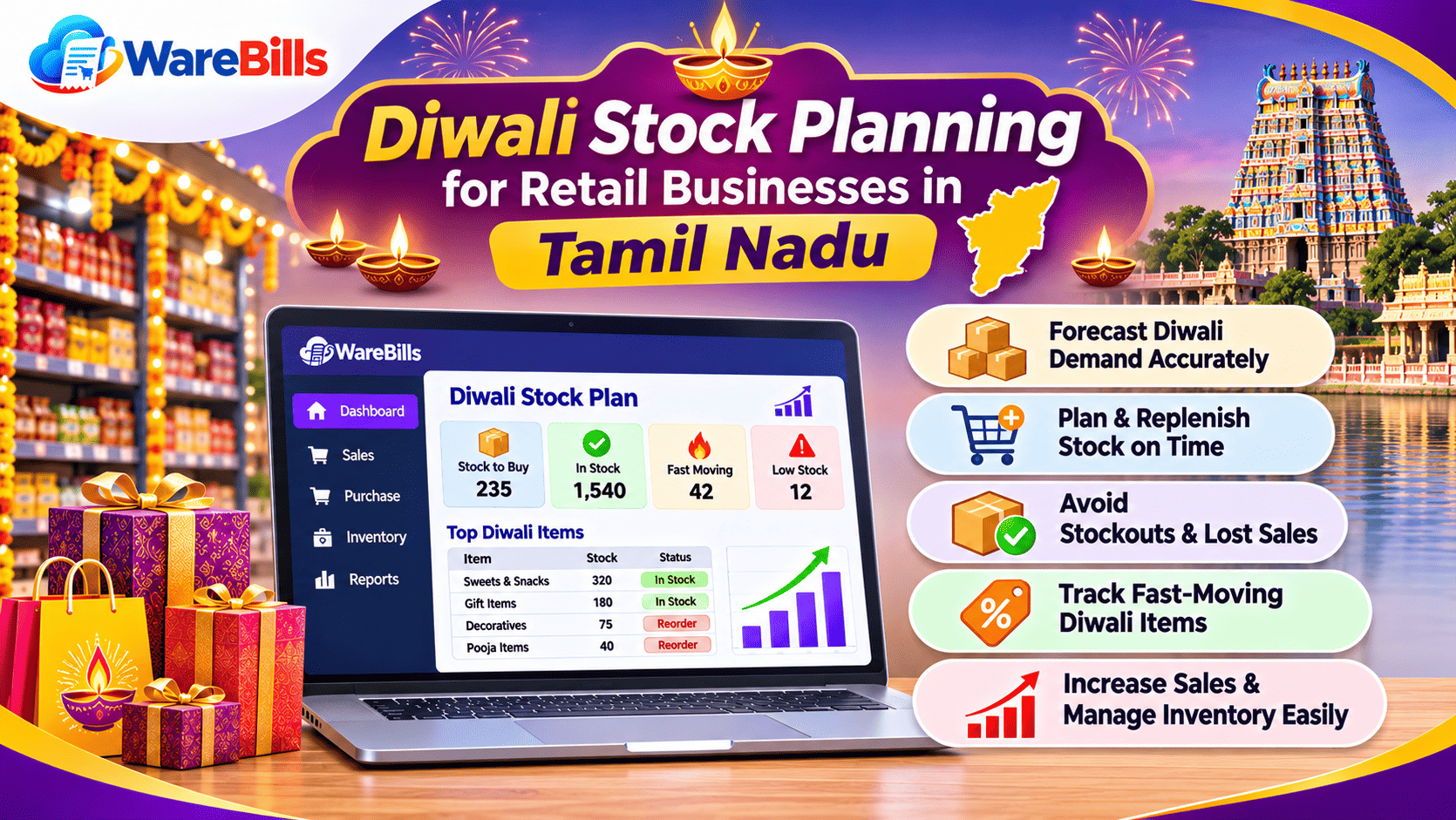
Diwali Stock Planning for Retail Businesses in Tamil Nadu
Festival seasons can bring new sales opportunities for retail businesses across Tamil Nadu. During Diwali, Pongal, Tamil New Year and other local celebrations, customers often shop for clothing, groceries, sweets, gifts, household products and festive accessories.
 Inventory Management
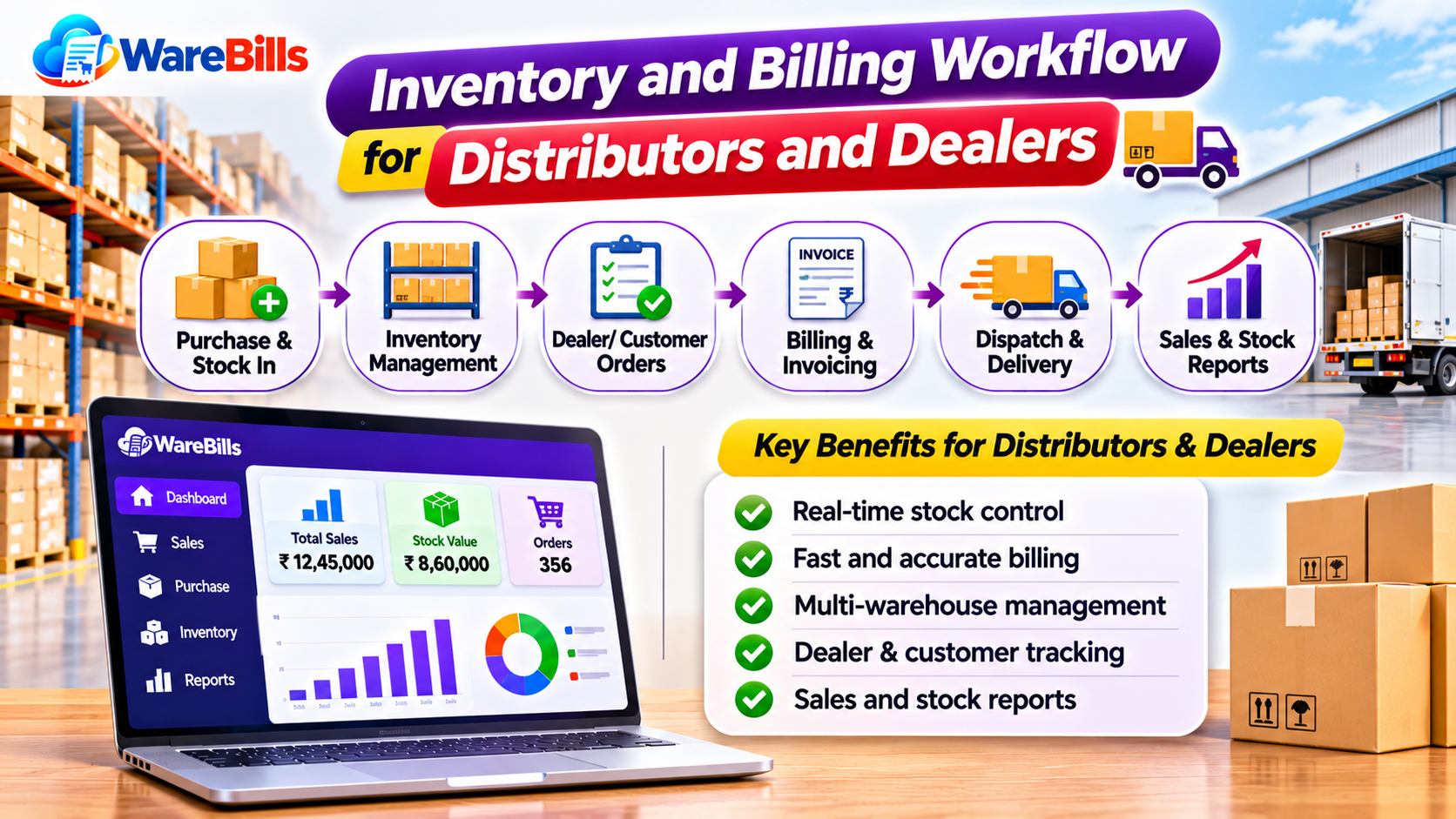
Inventory and Billing Workflow for Distributors and Dealers
Distributors and dealers connect manufacturers, suppliers, retailers and end customers. Their daily operations may involve purchasing goods in bulk, storing products, processing multiple sales orders, managing returns and tracking payments.
 Inventory Management
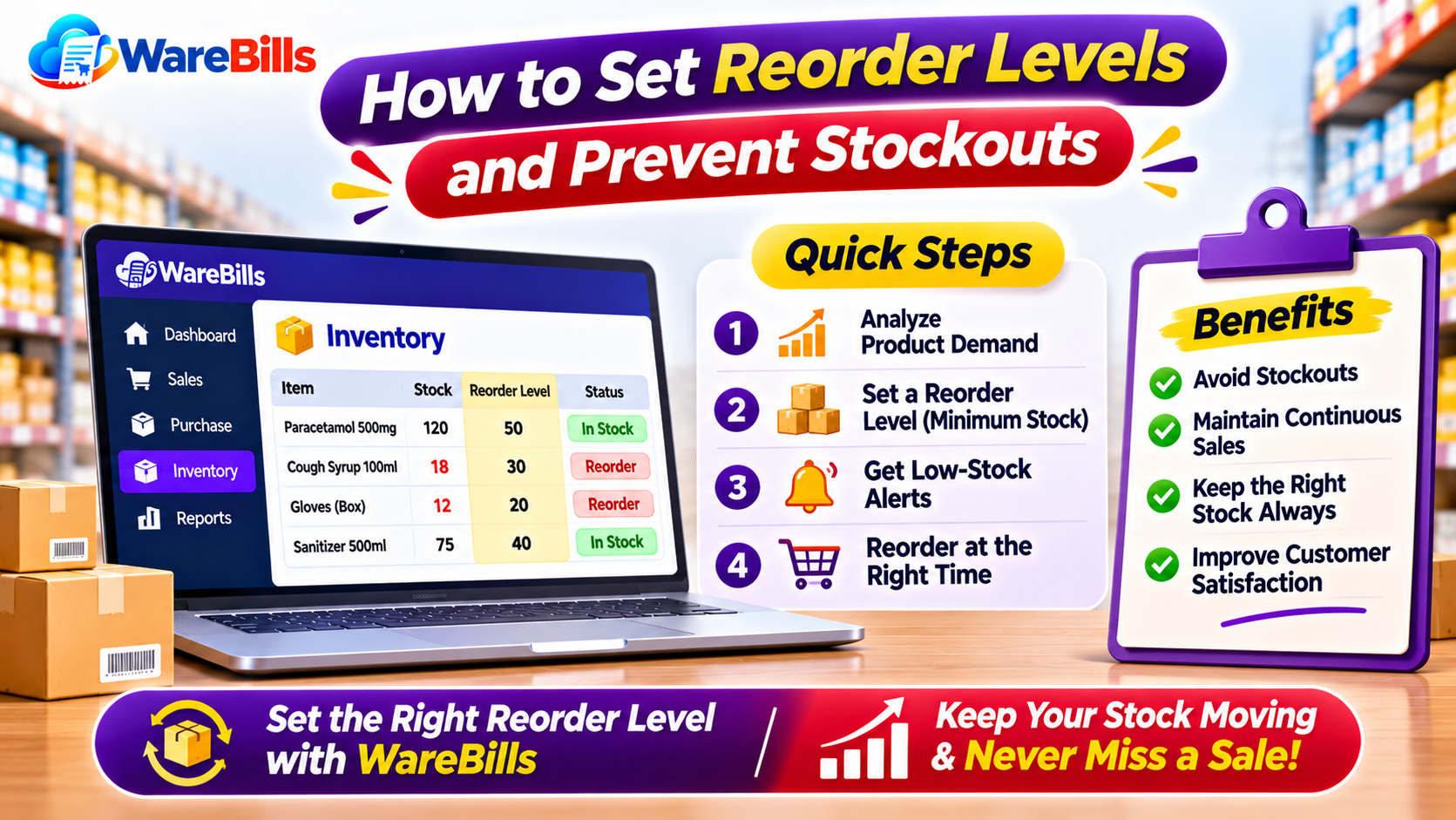
How to Set Reorder Levels and Prevent Stockouts
Running out of an important product can mean lost sales, unhappy customers and emergency purchases at higher prices. At the same time, ordering too much stock ties up working capital and increases storage costs.
 Inventory Management
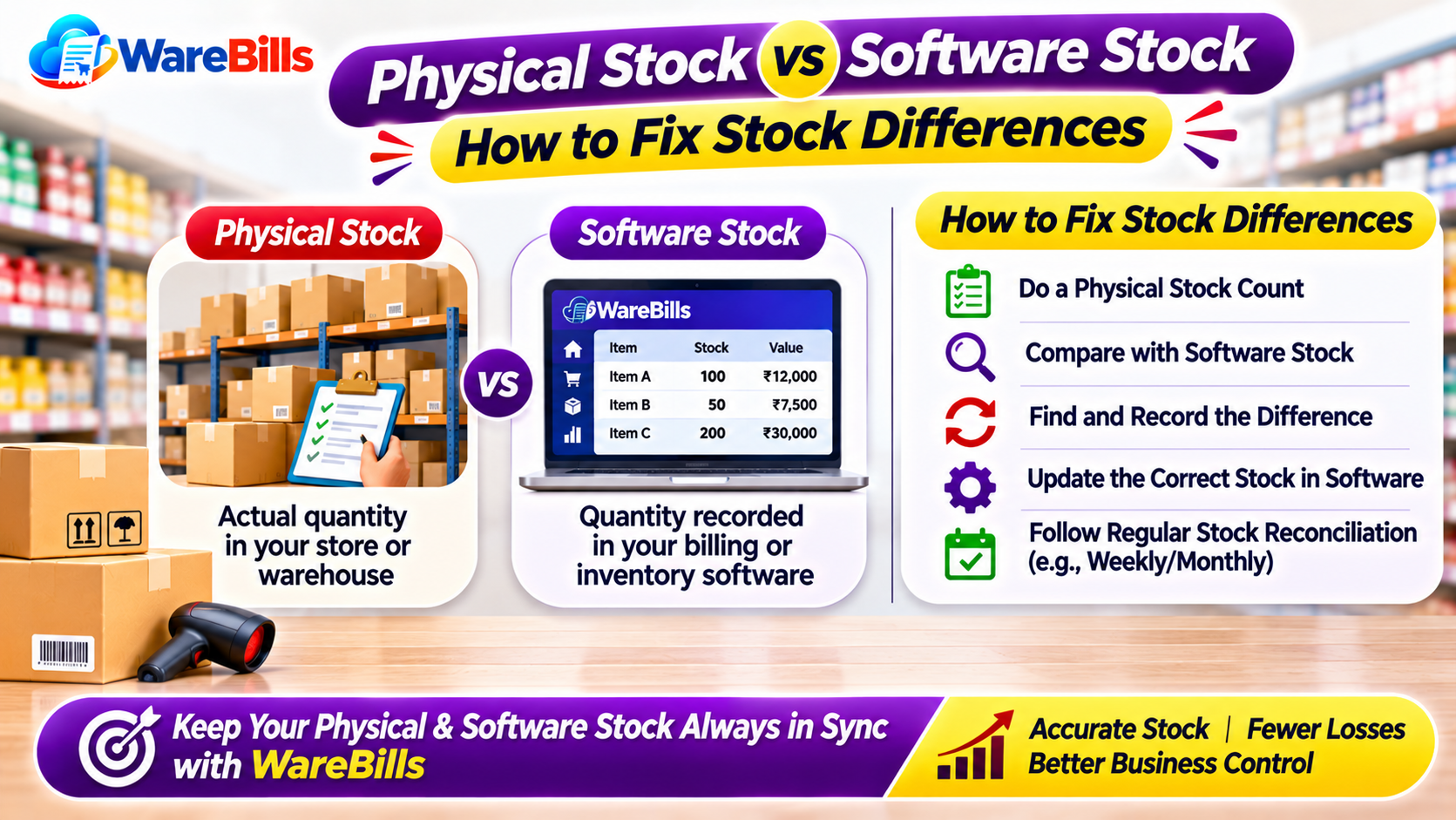
Physical Stock vs Software Stock: How to Fix Stock Differences
Businesses rely on accurate inventory records to manage purchases, sales, replenishment and customer orders. However, the quantity recorded in billing or inventory software does not always match the quantity available on the shelf or in the warehouse.
 Inventory Management
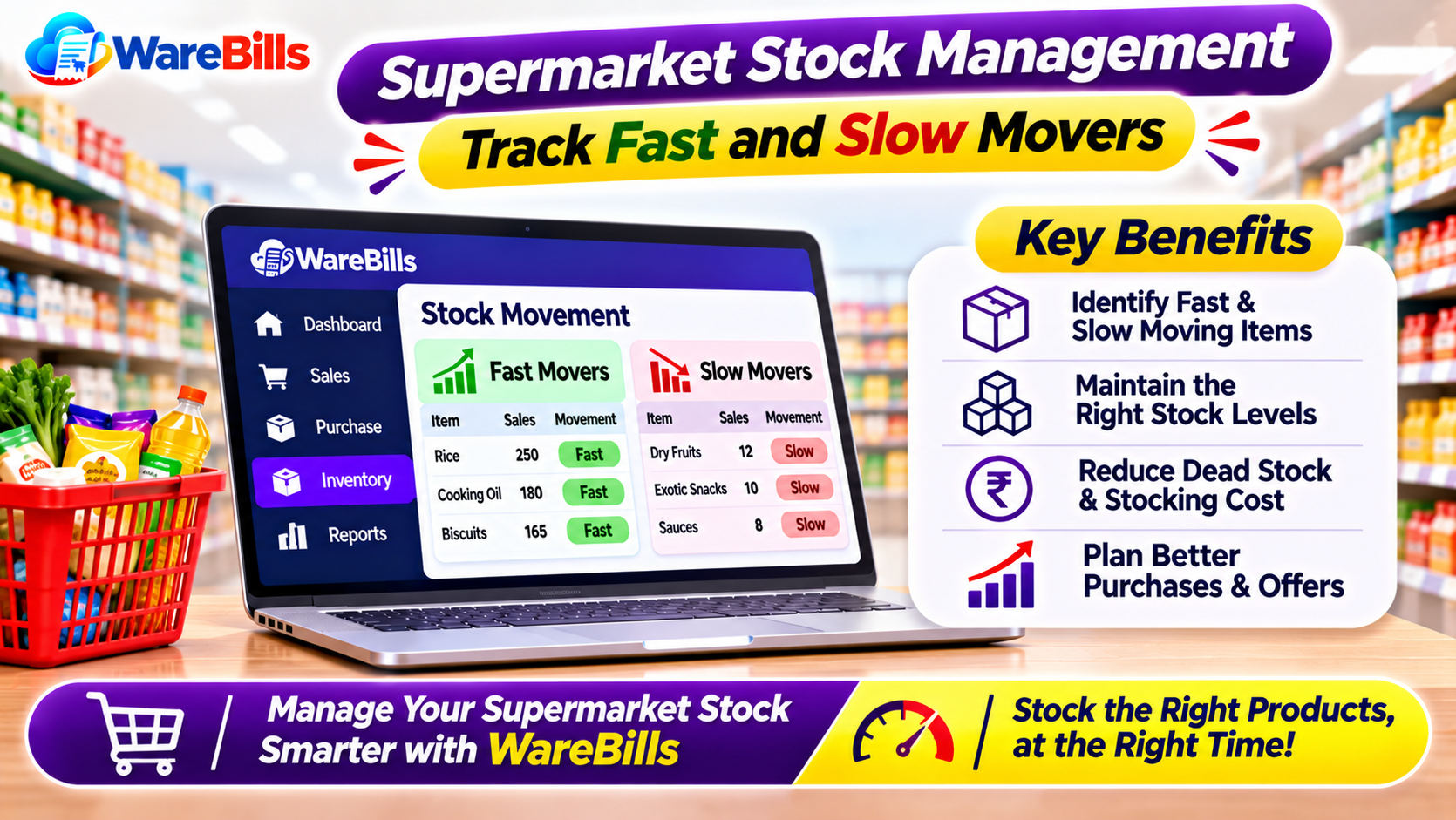
Supermarket Stock Management: Track Fast and Slow Movers
Supermarkets handle hundreds or thousands of products across categories such as groceries, beverages, personal care, household essentials and packaged foods. Some products sell several times a day, while others may remain on shelves for weeks.
 Inventory Management
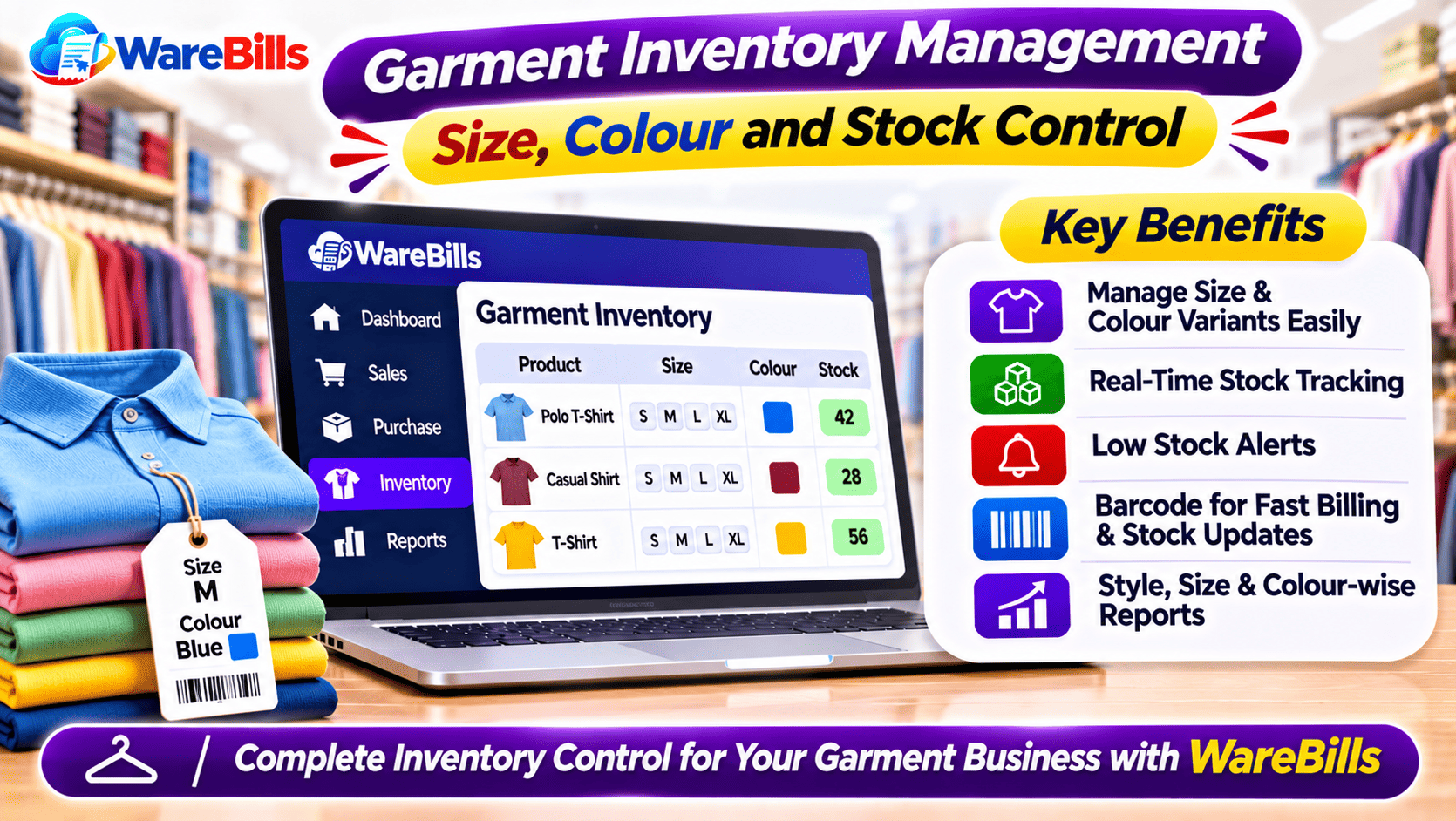
Garment Inventory Management: Size, Colour and Stock Control
Garment wholesalers handle many product variations, including different sizes, colours, designs, brands and styles. A single shirt, for example, may be available in five sizes and four colours. Each variation creates a separate stock-tracking requirement.
 Inventory Management
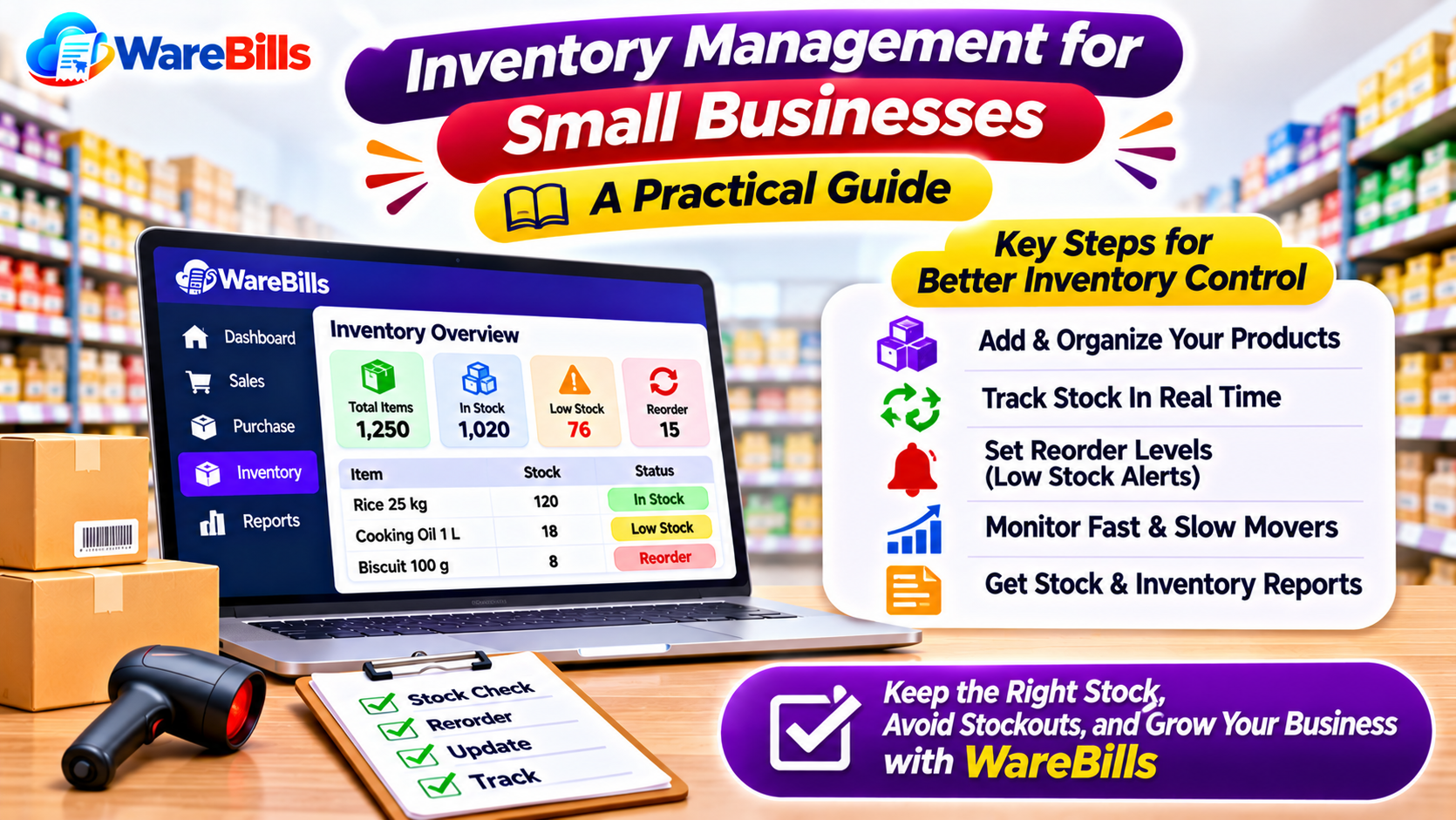
 for Small Businesses: A Practical Guide
Managing inventory effectively is important for every small business that buys, stores, and sells products. Whether you run a retail shop, grocery store, garment business, or wholesale distribution company, poor stock control can lead to product shortages, excess inventory, missed sales, and unnecessary expenses.
 Inventory Management
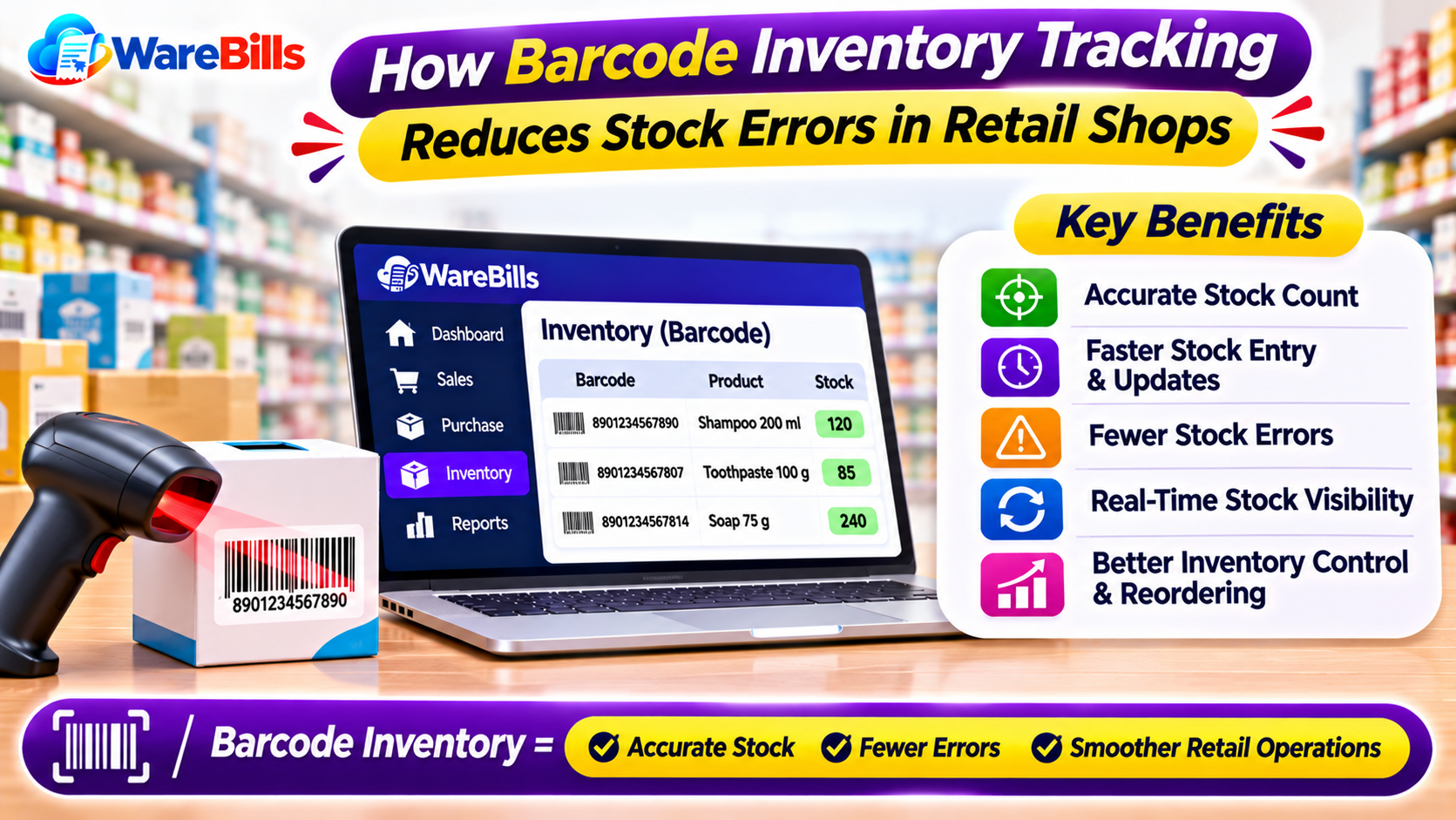
How Barcode Inventory Tracking Reduces Stock Errors in Retail Shops
Managing inventory accurately is essential for retail shops that handle hundreds or thousands of products. When stock is tracked manually, businesses may experience incorrect quantities, billing delays, misplaced products, and differences between physical stock and recorded inventory.
 Inventory Management
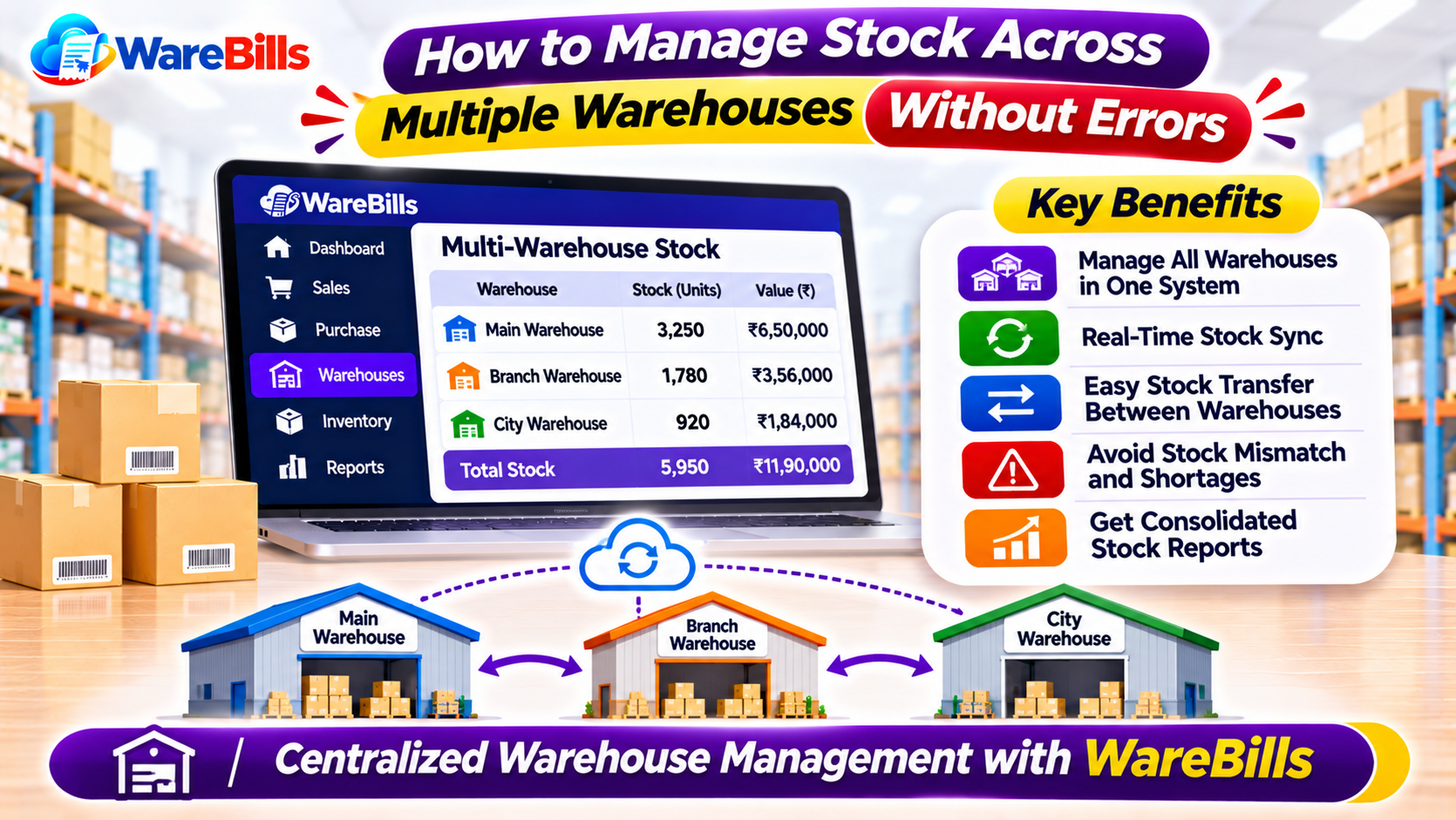
How to Manage Stock Across Multiple Warehouses Without Errors
Managing inventory across multiple warehouses can become challenging as a business grows. Stock may be stored at different locations, transferred between warehouses, or sold through multiple outlets. Without a clear tracking process, businesses can face stock mismatches, delayed orders, excess inventory, and unnecessary purchasing costs.