Unlike a small retail shop, a wholesale business may handle bulk quantities, multiple product categories, different customer price arrangements and stock stored across several warehouses. Even a small inventory error can affect multiple customer orders.
Poor inventory management can lead to stockouts, excess purchasing, delayed deliveries and confusion between recorded and physical stock.
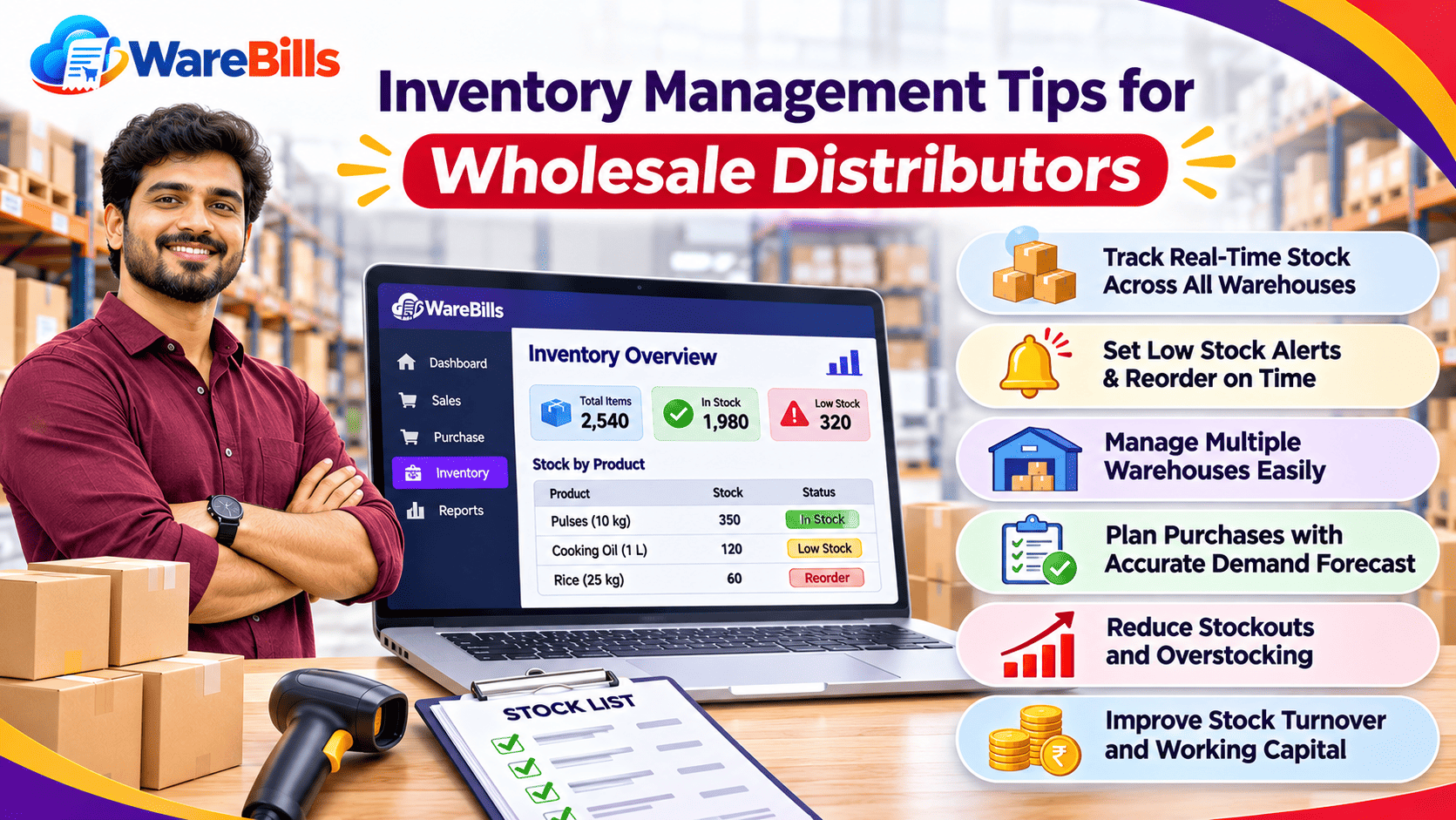
In this guide, we will explore practical inventory management tips for wholesale distributors to help improve stock visibility, purchasing decisions and daily operations.
1. Maintain Accurate Product Records
The foundation of wholesale inventory management is a consistent product database.
Each product should have a clear name, unique product code or SKU where appropriate, unit of measurement and other details needed for purchasing and sales.
For example, a distributor selling electrical supplies may handle similar-looking products with different specifications. A clear product code helps staff select the correct item when creating a purchase order or sales invoice.
Maintain relevant information such as:
- Product name and SKU
- Product category
- Purchase and selling units
- Pack size or carton quantity
- Supplier details
- Applicable product variants
- Purchase cost and selling price
- Tax details where relevant
- Reorder level, if used
Use consistent naming conventions to reduce duplicate product records. If the same product is entered under different names, the business may accidentally split its stock records and make purchasing decisions using incomplete information.
Review the product database periodically and correct duplicate or outdated entries through a controlled process.
2. Track Stock Across Every Warehouse
Wholesale distributors often store inventory in a central warehouse, regional storage facility or branch location.
Knowing the total stock available is not enough if the required products are located somewhere else.
Maintain location-wise records that help staff understand:
- Available quantity at each warehouse
- Stock reserved for customer orders
- Incoming supplier deliveries
- Products awaiting inspection
- Goods in transit between locations
- Damaged or otherwise unavailable inventory
For example, a distributor may have 500 units of a product across two warehouses. If 450 units are at one location and a customer needs 100 units from another branch, the distributor must determine whether a transfer or alternative fulfilment arrangement is required.
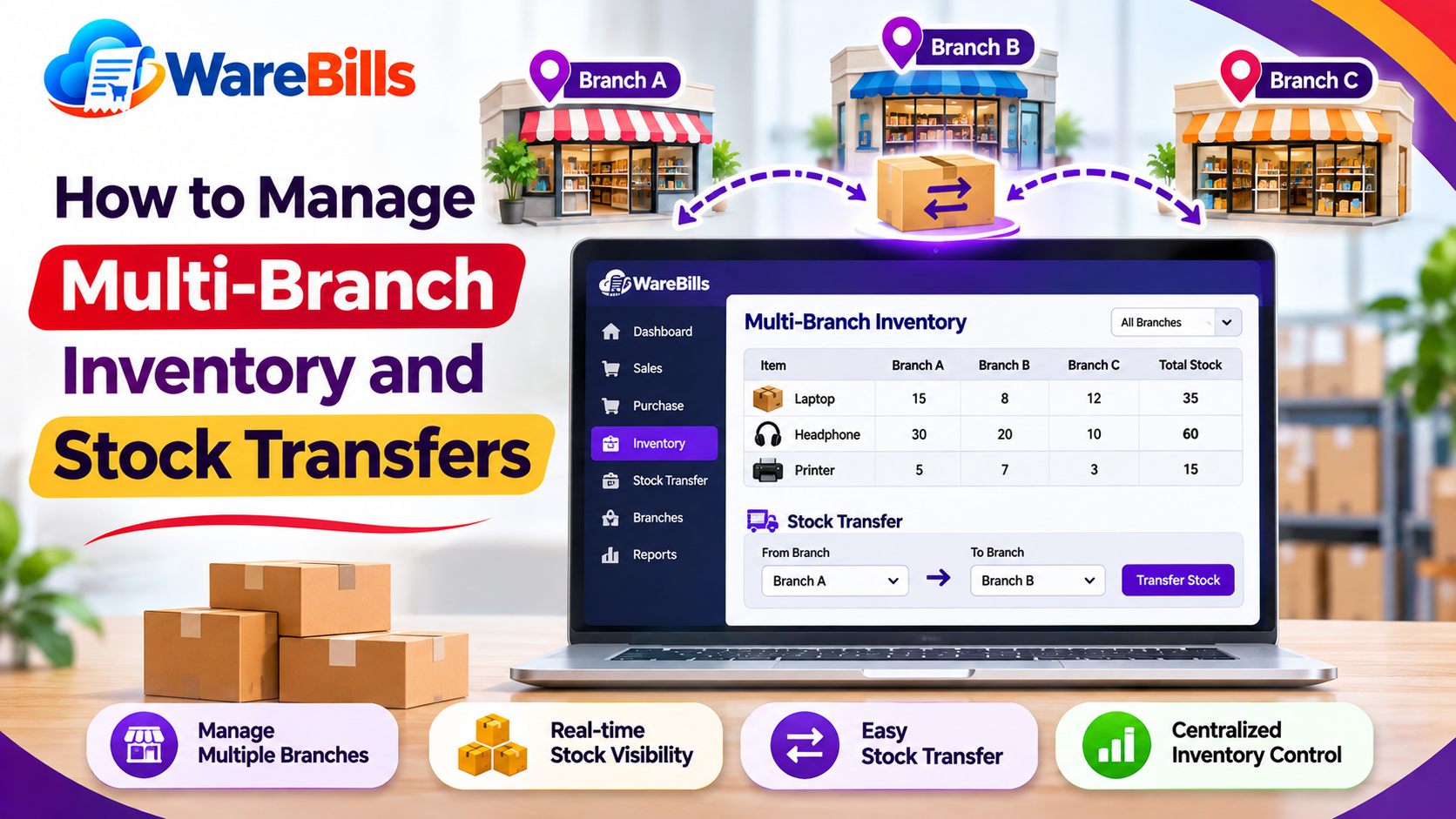
Record transfers accurately and verify that quantities decrease at the sending location and increase at the receiving location.
This reduces confusion and helps the sales team avoid promising stock that cannot be delivered on time.
3. Set Reorder Levels for Important Products
Reorder levels help distributors identify when additional stock may be needed.
A basic reorder point can be estimated using:
Reorder point = Average daily demand × Supplier lead time + Safety stock
For example, suppose a distributor sells an average of 40 units per day. The supplier usually takes five days to deliver, and the distributor keeps 50 units as safety stock.
Reorder point = 40 × 5 + 50 = 250 units.
When the relevant stock position approaches 250 units, the business can review whether a new purchase order is necessary.
This is a simplified example. Actual planning should consider demand variation, confirmed incoming stock, outstanding customer orders, supplier reliability and the business's inventory policy.
Do not use one fixed reorder level for every product. Fast-moving goods and products with long supplier lead times may require different controls from slow-moving items.
4. Forecast Demand Before Bulk Purchasing
Bulk purchasing can reduce the cost per unit in some situations, but large orders also tie up working capital and storage capacity.
Before placing a large order, estimate how much stock you are likely to sell during the relevant period.
Review:
- Historical sales quantities
- Confirmed customer orders
- Seasonal demand changes
- Supplier lead times
- Current available stock
- Existing purchase orders
- Product shelf life or obsolescence risk
- Storage and cash-flow constraints
For example, a distributor supplying festival-related products may need more inventory before a seasonal peak. However, the quantity should be based on expected demand and existing stock rather than assumptions alone.
Compare the benefit of a bulk discount with storage expenses, financing costs and the risk of unsold goods.
The cheapest purchase price is not always the lowest total business cost.
5. Organise Supplier and Purchase Order Management
Reliable supplier coordination helps distributors maintain stock availability without unnecessary emergency purchases.
Create a purchasing process that records what was ordered, when it was ordered and when the goods are expected to arrive.
A useful process includes:
- Review stock levels and outstanding customer demand.
- Confirm the quantity required.
- Compare supplier pricing and delivery terms.
- Create the purchase order where applicable.
- Confirm the order with the supplier.
- Monitor the expected delivery date.
- Verify the received quantity and condition.
- Record discrepancies and resolve them.
Track supplier performance using delivery reliability, product quality, pricing consistency and the handling of shortages or damaged goods.
Maintaining clear purchasing records also helps prevent duplicate orders when different employees are responsible for buying products.
6. Manage Bulk Sales and Unit Conversions Correctly
Wholesale businesses frequently buy products in cartons, cases, bundles or other bulk units and sell them in smaller quantities.
This creates a risk of stock errors if the units of measurement are not configured correctly.
For example, if one carton contains 24 individual units, the business must correctly account for the carton-to-unit conversion when buying, transferring and selling products.
Before using a software system, verify:
- Whether products can be purchased and sold in different units
- How pack sizes and conversions are defined
- Whether partial cartons are supported where needed
- How unit prices are calculated
- Whether stock reports show consistent quantities
Test representative transactions to confirm that purchasing one carton and selling individual units produces the expected remaining quantity.
Never assume that a system automatically supports every unit conversion or packaging arrangement.
7. Improve Order Fulfilment and Dispatch Accuracy
Accurate stock records are useful only when orders are picked and dispatched correctly.
A structured fulfilment process helps ensure that customers receive the right products and quantities.
Consider these practices:
- Verify product codes against the customer order.
- Check quantities before packing.
- Separate orders by customer or destination.
- Record substitutions only with appropriate approval.
- Document shortages before dispatch.
- Confirm dispatched quantities in the business records.
- Track goods in transit where required.
For example, if an order contains several similar product variants, staff should verify the SKU or product specification instead of relying only on a familiar product name.
Review picking mistakes, incomplete orders and customer complaints to identify where the fulfilment process needs improvement.
8. Track Customer Credit and Outstanding Orders
Many wholesale distributors sell to retailers and dealers under agreed payment terms. Managing outstanding balances and pending orders is therefore an important part of operations.
Maintain records of:
- Customer invoices
- Payments received
- Outstanding balances
- Credit terms
- Overdue invoices
- Orders awaiting fulfilment
- Stock reserved for customers
Before accepting a large order, review the customer's payment status and any applicable credit limits.
The precise controls will depend on the business's policies and available software features.
Keep inventory availability and customer credit information distinct but coordinated. A customer may have an outstanding invoice while the required products are also reserved for a pending order.
Clear records help sales and accounts teams make consistent decisions.
9. Conduct Regular Stock Audits
Even well-organised inventory systems can contain errors if transactions are missed or physical stock is misplaced.
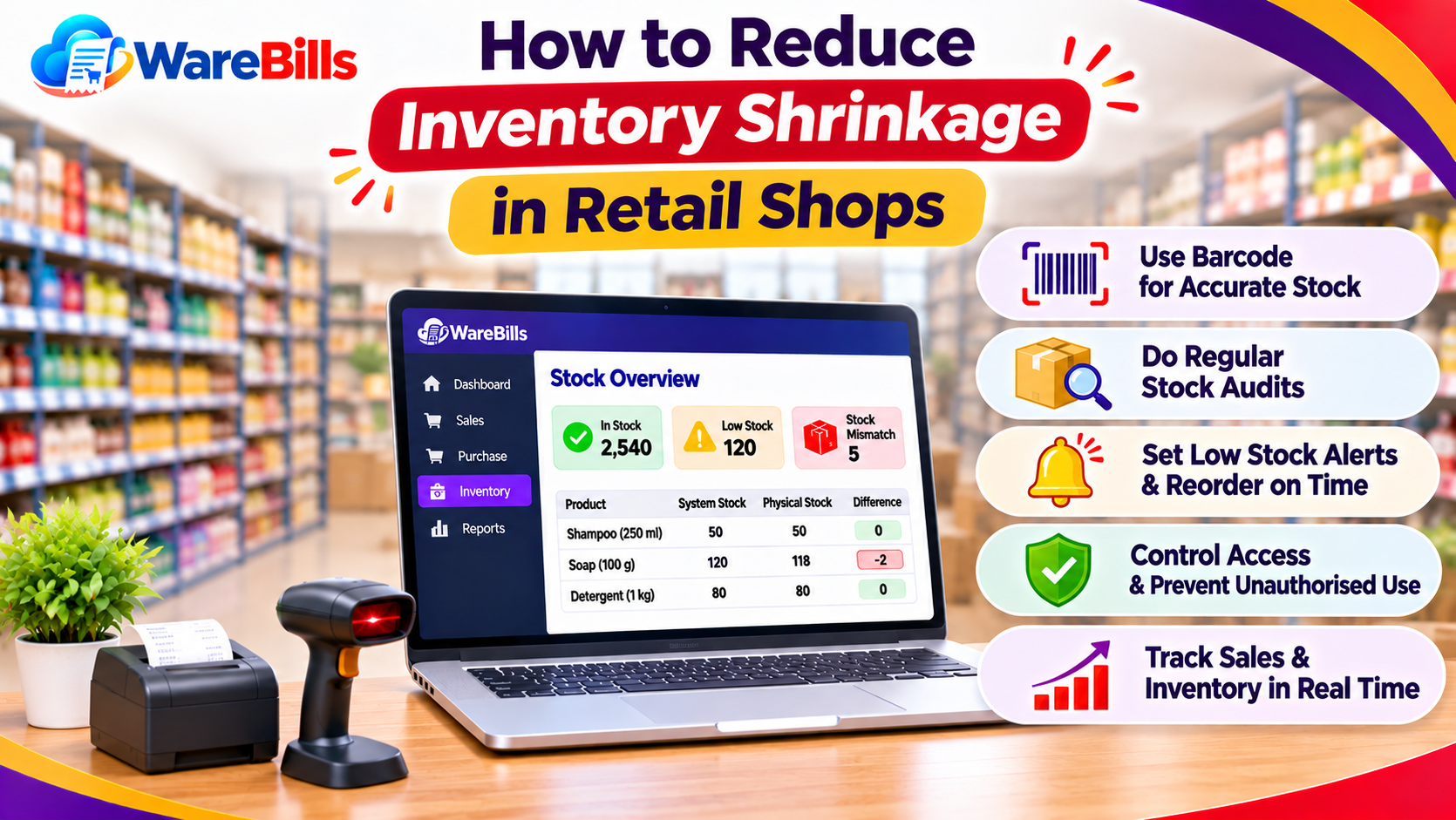
Compare actual quantities with recorded quantities regularly.
Wholesale distributors can use:
Cycle counting: Count selected products according to a planned schedule.
High-value item checks: Review expensive or loss-sensitive products more frequently.
Location checks: Verify stock at each warehouse or storage area.
Discrepancy investigations: Review products with recurring differences between physical and recorded quantities.
When a difference is found, check purchase records, dispatch documents, transfers, returns and adjustments before correcting the stock balance.
Record the reason for any adjustment and follow the business's authorisation procedure.
Regular checks help identify process problems before they affect a large number of customer orders.
10. Use Inventory Reports to Improve Decisions
Reports help distributors identify patterns that may not be obvious from individual transactions.
Useful reports may include:
- Current stock by product and warehouse
- Product-wise sales
- Purchase history
- Fast-moving and slow-moving products
- Low-stock items
- Stock ageing, where supported
- Supplier delivery performance
- Customer outstanding balances
- Stock adjustments and returns
For example, a slow-moving product report may show that a distributor is holding large quantities of goods with limited demand.
The business can then review purchasing plans and decide whether to reduce future orders, adjust pricing or contact relevant customers.
Check how each report is calculated and whether its data is up to date. Reports are only as reliable as the transactions and product records behind them.
11. Evaluate Billing and Inventory Software
As wholesale operations grow, managing purchases, sales and warehouse stock through disconnected records can become difficult.
Billing and inventory software may help centralise transaction records and provide better visibility into day-to-day operations, depending on the system's capabilities.
When evaluating a solution, confirm whether it supports your required workflows, such as:
- Bulk purchasing and sales
- Different units of measurement
- Supplier and customer records
- Purchase and sales returns
- Warehouse-wise stock management
- Stock transfers
- Customer payment records
- Inventory and sales reports
- User permissions
- Data export and backup arrangements
WareBills is one option wholesale distributors can evaluate for their billing and inventory requirements. Review its available features and verify that the specific warehouse, bulk-sales, reporting and payment workflows your business needs are supported.
Request a demonstration using representative transactions before making a decision. Do not assume that all advanced wholesale features are included in every software product or subscription plan.
12. Common Inventory Management Mistakes to Avoid
Wholesale distributors should watch out for these common problems.
Ordering without reviewing existing stock: This can create duplicate purchases and excess inventory.
Ignoring supplier lead times: Delayed deliveries may leave the business unable to fulfil customer orders.
Using inconsistent product codes: Duplicate records make stock tracking and purchasing less reliable.
Mixing warehouse quantities: Total stock may appear sufficient even when a particular location has a shortage.
Ignoring unit conversions: Incorrect carton or pack-size calculations can create inventory discrepancies.
Failing to record returns: Unrecorded returns can distort stock quantities and transaction records.
Relying only on reports: Periodic physical checks are still necessary to verify recorded inventory.
Overlooking slow-moving stock: Excess inventory can tie up working capital and storage space.
Review these areas periodically and assign clear responsibility for important stock-control tasks.
Conclusion
Effective inventory management helps wholesale distributors maintain product availability, control purchasing decisions and fulfil customer orders more reliably.
Start by maintaining accurate product records, tracking stock by warehouse, setting sensible reorder levels and verifying supplier deliveries. Combine these practices with clear dispatch procedures, regular stock audits and useful inventory reports.
Billing and inventory software may support these processes when its capabilities match your business requirements. For distributors evaluating WareBills, confirm that the available features suit your purchasing, warehouse, sales and reporting workflows.
A consistent inventory process can help wholesale businesses reduce avoidable errors and make better-informed operational decisions.